
The Thread That Holds Us Together
Oct 08, 2026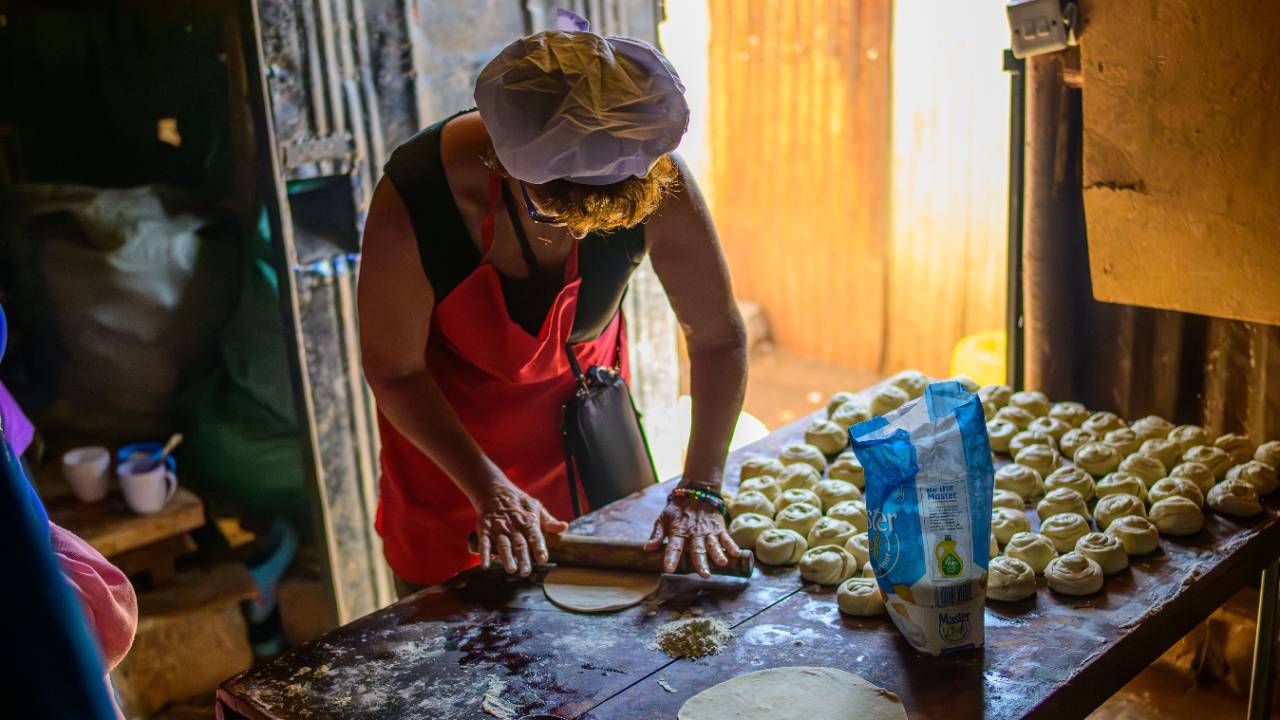
Rolling chapati in Kenya reminded me how much wisdom lives in our hands, carried from one table, one woman, and one generation to another.
The Thread That Holds Us Together
Not long ago, I had the pleasure of speaking with a local garden club.
There is something about a room full of garden club women that feels different from most rooms. It is not loud. It is not trying to impress anyone. It has a steadiness to it.
You can almost feel the seasons gathered there.
There are women who know when the soil is ready because they have bent down and touched it for years. Women who can look at a plant and sense what it needs before they ever reach for a book. Women who have shared cuttings across fences, recipes across kitchen tables, and quiet encouragement in the middle of ordinary days.
Garden clubs are often described by what they do. They plant flowers downtown. They care for public spaces. They host programs, arrange bouquets, identify weeds, swap seeds, and talk about what grew well this year and what did not.
But sitting with them, I was reminded that garden clubs have always been more than that.
They are part of the quiet heartbeat of a town.
They hold a kind of memory that does not always get written down. The kind that moves person to person, neighbor to neighbor, season to season. A woman learns from her mother, who learned from an aunt, who learned from a neighbor, who learned because one year the tomatoes failed and the next year she tried again.
That is how so much of life used to be carried.
Not in a manual. Not in a video. Not in a search bar.
Hand to hand.
Kitchen to kitchen.
Garden to garden.
I have been thinking about that invisible thread.
For a long time, the thread of daily life ran through the soil. Soil to seed. Seed to plant. Plant to harvest. Harvest to preparation. Preparation to table.
There was a rhythm to it, and that rhythm carried knowledge inside it.
You knew what was in season because it was growing outside. You knew how long something took because you had waited for it. You knew how to preserve, stretch, share, and make do because life asked those things of you.
Today, for many of us, that thread has changed.
Now it often runs from grocery store to product to table.
There is no shame in that. I am grateful for grocery stores. I am grateful for convenience. I am grateful that a woman can feed herself and her family without doing every single thing from scratch.
But convenience does have a price.
Sometimes the price is experience.
We can look up almost anything now. We can Google a question in seconds. We can watch someone demonstrate it online. We can even ask AI to explain what went wrong with our hydrangeas or why the pie crust did not turn out.
Those tools are helpful. I use them too.
But they do not replace the presence of someone standing beside you saying, “No, that’s not quite right. Here, let me show you.”
There is a difference between information and lived knowledge.
Information can tell you when to prune.
Lived knowledge shows you where to place your hand.
Information can list the ingredients.
Lived knowledge remembers that your grandmother never measured the cinnamon, but somehow it was always right.
Information can explain how deep to plant a seed.
Lived knowledge notices the weight of the soil after rain, the way the air feels before frost, the patience required when nothing seems to be happening underground.
So much wisdom lives in the body before it ever becomes words.
It lives in the wrist, the eye, the pause, the habit. It lives in the woman who does not think she is teaching anything remarkable when she shows a child how to snap beans, deadhead marigolds, knead dough, save seed, set a table, or wait.
At this age, I think many of us begin to see the value of what we once thought was ordinary.
The women before us may not have called it legacy. They may not have thought of themselves as keepers of anything grand. They were simply doing what needed doing. Planting, cooking, tending, mending, showing up.
But the thread was there.
And it still is.
It may be thinner in places. It may have skipped a generation here and there. It may look different now than it did fifty years ago.
Still, it is there whenever one person takes the time to show another. Whenever a story is told while hands are busy. Whenever someone says, “This is how my mother did it,” or “The first year I tried this, it failed,” or “Come here, let me show you.”
That thread is not only about gardening.
It is about belonging.
It is about remembering that we do not live best as isolated people with endless information and no one beside us.
We live best when wisdom has a face, a voice, a table, a porch, a garden gate.
As October settles in and the garden begins to slow, I find myself grateful for the women who have held this thread without making much fuss about it.
The garden club women. The mothers and grandmothers. The neighbors with extra zucchini. The aunties who knew how to make something stretch. The friend who brought over a plant cutting in a paper cup. The woman at church who always knew what to do with too many tomatoes.
They remind me that not everything precious is new.
Some things are passed along quietly.
Some things are learned by standing close.
Some things take years before we realize they were gifts.
Maybe today is a good day to remember someone who showed you how to do something with her own two hands.
Maybe it was in a garden. Maybe it was at a stove. Maybe it was at a sewing machine, a clothesline, a canning pot, a flower bed, or a kitchen table in Kenya, rolling chapati by hand.
And maybe, without even noticing it, you are holding part of that same thread now.
Not perfectly. Not loudly.
Just faithfully.
Season to season.
Hand to hand.
Life to life.
If this resonated with you, stay connected.
Receive gentle reflections, stories, and invitations for women choosing connection, courage, and new beginnings.
Your information is safe here. We'll never share or sell it.